
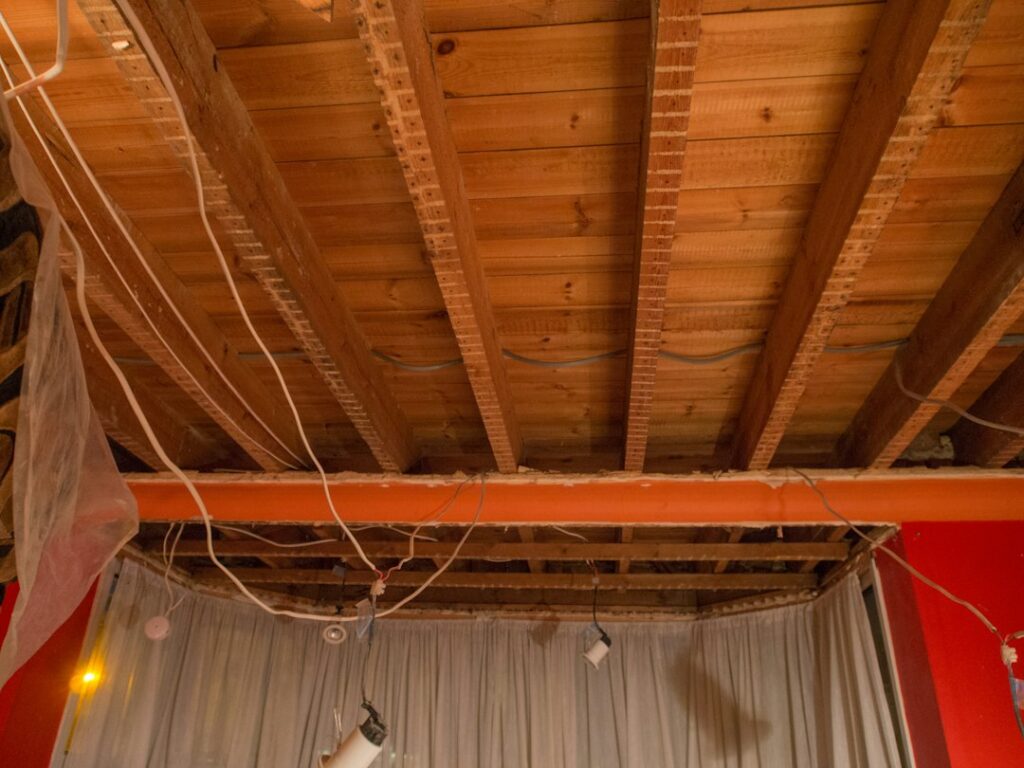
What happens to a home when a roof leaks?
A roof leak can affect much more than shingles, underlayment, or attic insulation. Water that enters through the roof may gradually damage roof sheathing, rafters, ceiling joists, insulation, drywall, electrical components, and interior finishes.
In New Hartford, NY, seasonal weather can increase the consequences of a small leak. Snow accumulation, freeze-thaw cycles, wind-driven rain, ice buildup, and heavy spring storms may expose weak areas repeatedly. A leak that appears minor during one rainfall can become a structural concern if moisture remains trapped in the roof or wall system.
How does water damage the roof structure?
Roof sheathing is the layer of wood beneath the shingles. It helps support the roofing materials and connects the roof covering to the framing system. If water reaches the sheathing, the wood can absorb moisture and begin to swell, soften, stain, or decay.
Continued moisture may affect:
- Roof decking around flashing, valleys, chimneys, skylights, and roof penetrations
- Rafters and trusses that support the roof slope
- Ceiling joists that help hold the roof and upper floors in position
- Fascia boards and soffit framing near roof edges
- Wall framing where water travels beyond the roofline
Wood does not need to be visibly soaked every day to suffer damage. Repeated wetting and drying can cause movement, splitting, fastener loosening, and gradual loss of strength. In some cases, the leak becomes noticeable indoors only after the surrounding wood has already been affected.
Can a small ceiling stain indicate a serious problem?
Yes. A ceiling stain shows that water has reached the interior surface, but it does not reveal where the leak began or how far the water traveled.
Roof water may move along the underside of sheathing, rafters, insulation, or electrical wiring before dripping through the ceiling. The visible mark may therefore be several feet away from the actual entry point. A small brown ring can result from a limited leak, but it can also be the final visible point of a larger hidden moisture path.
A stain that grows, darkens, bubbles, or returns after drying deserves attention. Soft drywall, sagging ceiling material, peeling paint, and damp insulation are signs that moisture may still be present.
How can a roof leak affect attic insulation?
Wet insulation loses much of its ability to resist heat transfer. Fiberglass insulation may become compressed or contaminated, while cellulose insulation can retain moisture and become heavy. Damp insulation can also make it harder for roof framing to dry.
Moisture in the attic may lead to:
- Reduced energy efficiency
- Higher humidity near the roof deck
- Mold growth on wood, paper facings, or dusty surfaces
- Condensation problems during cold weather
- Hidden deterioration that is difficult to see from living areas
Insulation is not always the original source of an attic moisture problem. Poor ventilation, indoor humidity, bathroom exhaust directed into the attic, and air leaks around ceiling penetrations can also create moisture. A careful inspection should distinguish between roof leakage and condensation.
Does a roof leak create mold or indoor air concerns?
A leak does not automatically mean that mold will develop, but persistent dampness creates favorable conditions for mold growth. Mold may appear on roof sheathing, insulation, drywall, framing, or stored items in the attic.
The risk increases when:
- Materials remain damp for an extended period
- The attic has limited air movement
- Water enters wall cavities or enclosed ceilings
- Warm indoor air meets cold, wet building materials
- Damaged materials are covered before they dry
Mold is only one concern. Wet materials can produce musty odors, damage finishes, attract insects, and reduce the durability of wood components. People with asthma, allergies, or respiratory sensitivities may be more affected by damp indoor conditions.
Can water damage spread into walls and floors?
Yes. Roof leaks often travel vertically, but they can also move sideways along framing and building materials. Water entering near a roof edge may affect the top plate of an exterior wall, window headers, insulation, drywall, or trim.
If water reaches lower levels, it may damage:
- Wall cavities and interior paint
- Hardwood flooring or subflooring
- Electrical outlets and wiring
- Cabinets and built-in features
- Ceiling assemblies below the original leak
Water near electrical components creates a safety concern even when there is no visible sparking. Lights, outlets, switches, and ceiling fans that become wet should not be used until the affected area has been evaluated safely.

Why are winter leaks especially concerning in this area?
Cold-weather conditions can make roof leaks harder to detect and more difficult to dry. Snow may cover damaged shingles or flashing, while ice can block drainage paths and force water beneath roofing materials. Freeze-thaw cycles may enlarge small gaps as trapped moisture expands and contracts.
During winter, a leak may appear as:
- A ceiling stain during or after a thaw
- Damp attic insulation
- Frost or unusual moisture on roof sheathing
- Icicles associated with uneven roof temperatures
- Water entering near eaves, valleys, or roof penetrations
Not every icicle proves that a roof is leaking, and not every winter ceiling stain results from ice buildup. Indoor heat loss, inadequate insulation, and ventilation problems can contribute to roof-edge ice. The underlying moisture source needs to be identified rather than assumed.
What signs suggest structural damage?
Some warning signs are cosmetic, while others may indicate that framing has been affected. More concerning signs include:
- A sagging area of roof decking or ceiling
- Rafters, trusses, or sheathing that feel soft or crumble
- Doors or windows that begin sticking near a leak
- Cracks that widen around ceilings or upper walls
- Persistent dampness or a musty odor in the attic
- Rusted fasteners or corroded metal connectors
- Visible mold combined with long-term moisture
- Insulation that is saturated, compressed, or falling
A roof leak should be treated as a safety issue if the ceiling is sagging, water is near electrical equipment, or framing appears unstable. Avoid walking on a wet or damaged roof, especially during snow, ice, high winds, or poor visibility.
What should a homeowner do after discovering a leak?
Start by protecting people and belongings. Place a container under active dripping, move furniture, and carefully remove water from floors. If water is near electrical fixtures, avoid touching the fixture or standing in pooled water.
Document the location and appearance of stains, drips, wet insulation, and exterior roof conditions. Note whether the problem occurs during rain, snow, thawing, or strong wind. This information can help distinguish a roof covering failure from condensation or plumbing moisture.
Do not seal a ceiling stain with paint before the source is addressed and the materials are dry. Covering the evidence can hide a continuing problem. Wet insulation, drywall, and other porous materials may need special handling if they cannot dry promptly.
How can roof leaks be prevented from becoming structural problems?
Routine observation helps catch problems before moisture reaches major framing members. After severe weather, check accessible attic areas for dampness, staining, daylight, damaged insulation, and roof-deck discoloration. From the ground, look for missing shingles, lifted flashing, damaged vent components, blocked roof drainage, and sagging rooflines.
Regular attention is especially useful before winter and after periods of heavy snow, ice, wind, or repeated rainfall. Keeping attic insulation and ventilation in proper condition also helps reduce condensation that can be mistaken for a roof leak.
The main principle is simple: a roof leak is not only a roofing-material problem. If water remains active or hidden, it can gradually affect the structural wood, insulation, walls, ceilings, electrical components, and indoor air conditions throughout the home.
