
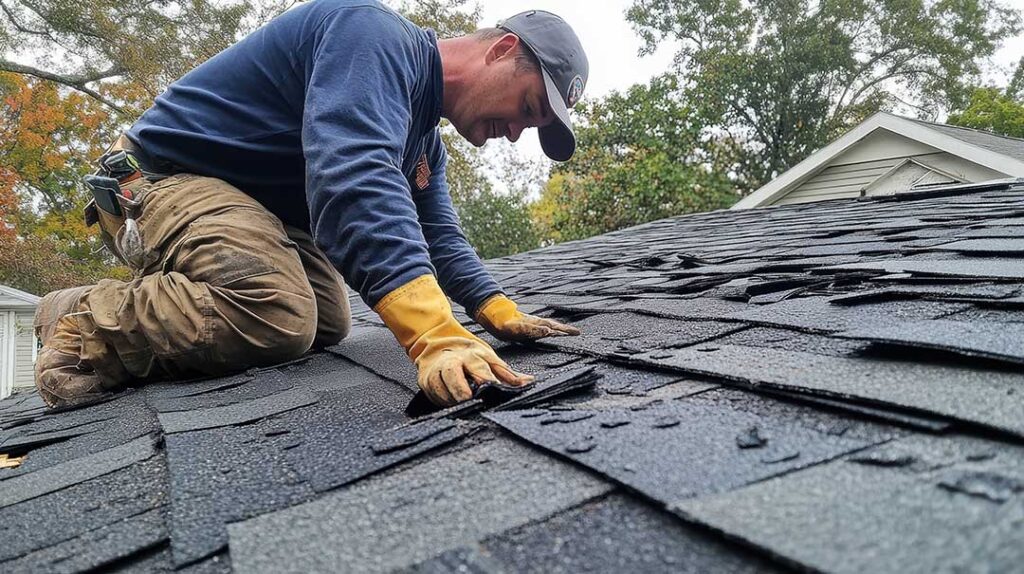
Roof repairs are often urgent, but choosing a roofing company should not be rushed. A reliable decision depends on more than the first available phone number or the lowest quoted price. Homeowners should evaluate experience, documentation, repair methods, communication, and the company’s understanding of local weather conditions.
In New Hartford, NY, roofs must withstand freeze-thaw cycles, snow, ice, wind, heavy rain, and occasional rapid temperature changes. Those conditions make careful diagnosis especially important. A roofing company that treats every leak the same way may miss the underlying problem.
What should be checked before contacting a roofing company?
Before comparing companies, gather basic information about the problem. Note where water appears inside the home, when the leak occurs, whether shingles are missing, and whether the issue began after a storm or heavy snowfall.
Useful details include:
- The approximate age of the roof
- Areas with visible staining or dampness
- Missing, lifted, cracked, or curling shingles
- Sagging roof sections or damaged gutters
- Whether the leak appears during rain, melting snow, or strong wind
- Any recent attic moisture, musty odors, or visible mold-like growth
Interior water stains do not always line up directly with the exterior source. Water can travel along roof decking, rafters, insulation, or wall cavities before becoming visible. A company should be willing to investigate the full path rather than automatically replacing the shingles above the stain.
Photographs taken from the ground or attic can help explain the issue, but homeowners should not climb onto a wet, icy, or steep roof.
How can homeowners verify that a roofing company is legitimate?
A reputable roofing company should be willing to provide basic business and insurance information without hesitation. The exact requirements can vary, but homeowners should ask whether the company carries liability insurance and workers’ compensation coverage for its crews.
It is also reasonable to request:
- A written business name and physical contact information
- Proof of current insurance
- Information about applicable licenses or registration requirements
- A written description of the proposed repair
- References for similar repair work
- Clarification about who will perform the work
Insurance documentation should be current and issued by the insurer or an authorized representative. A verbal statement that a company is “fully covered” is less useful than documentation that can be reviewed.
Homeowners should also be cautious if a representative refuses to explain the company’s legal business identity, pressures someone to sign immediately, or asks for a large payment before the problem has been clearly described.
What questions should be asked during the inspection?
The inspection should produce an explanation, not just a price. Ask the roofing company to identify the likely source of the problem and explain how that conclusion was reached.
Helpful questions include:
- Is the problem limited to one area, or are there signs of broader roof wear?
- Could the leak be related to flashing, ventilation, a chimney, a skylight, a valley, or a plumbing vent?
- Is the roof deck underneath the shingles damaged?
- Does the repair address the source of the water or only the visible symptom?
- What materials will be removed and replaced?
- How will the repaired area be sealed against snow, ice, and wind?
- Is temporary protection needed before permanent repairs begin?
- What conditions could change the scope of work?
A careful roofer may need to inspect the attic, roof edges, penetrations, flashing, gutters, and nearby exterior surfaces. If weather prevents a complete inspection, that limitation should be explained clearly.
How should repair estimates be compared?
The lowest estimate is not automatically the best value. Estimates should be compared by scope, materials, preparation, and exclusions rather than by total price alone.
A useful written estimate generally identifies:
- The location and nature of the suspected problem
- Materials to be used
- Removal and disposal responsibilities
- Flashing or underlayment work
- Decking replacement terms, if hidden damage is discovered
- Labor and cleanup
- Warranty terms and limitations
- Payment schedule
- The process for approving additional work
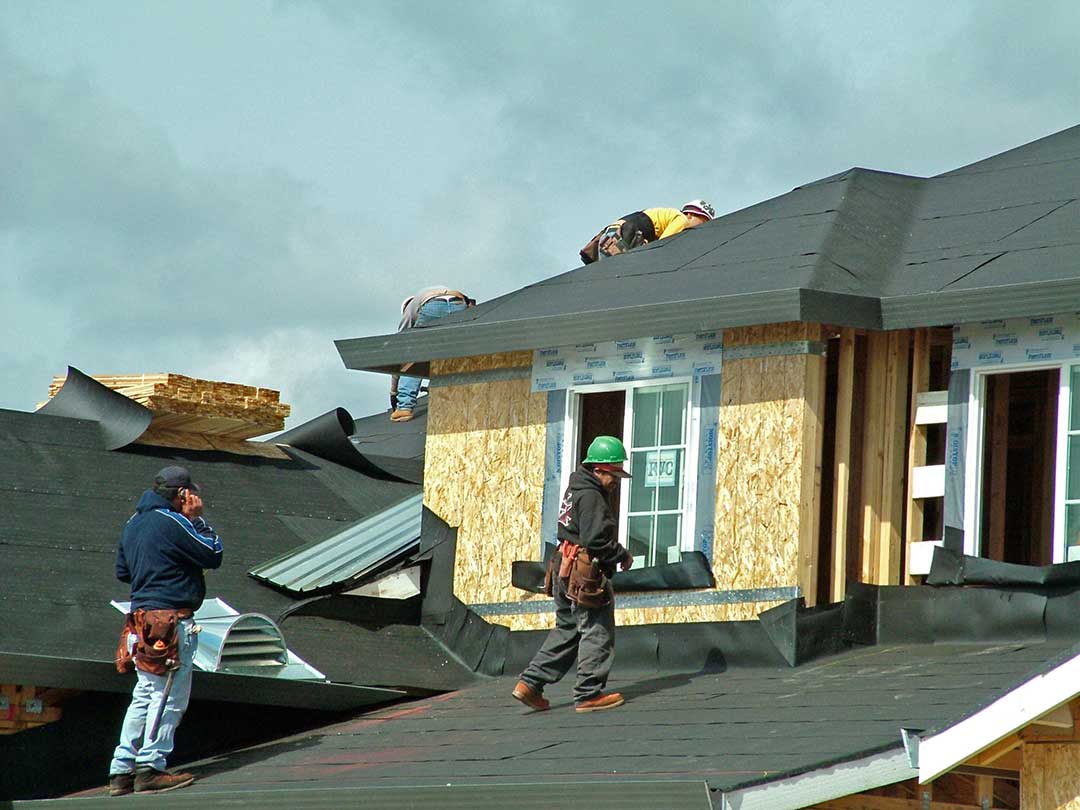
Be cautious with estimates that use vague phrases such as “repair roof as needed.” That wording may make it difficult to determine what is included.
A major price difference may reflect legitimate differences. One company may include replacement of deteriorated wood, improved flashing, or more extensive water testing, while another may offer only surface patching. Ask what each estimate leaves out.
Is a temporary roof repair acceptable?
Temporary repairs can be appropriate when weather, safety, or scheduling prevents permanent work. A tarp, temporary seal, or limited patch may reduce immediate water entry, but it should not be described as a lasting solution unless the condition truly supports that conclusion.
In a climate with winter precipitation and repeated freezing and thawing, temporary materials can shift, crack, or lose adhesion. Ask how long the temporary measure is expected to last and what conditions could cause it to fail.
Emergency stabilization is especially important when water is entering electrical areas, ceilings are bulging, insulation is saturated, or structural materials appear weakened. In those situations, protect occupants from falling materials and avoid handling electrical fixtures near water.
How can homeowners recognize storm-related pressure tactics?
After severe weather, some roofing companies move rapidly through affected neighborhoods. Quick inspections can be useful, but storm damage should not be used as a reason to pressure a homeowner into an immediate contract.
Warning signs include:
- Claims that a roof must be replaced without a close inspection
- Requests to sign insurance paperwork that is not understood
- Promises that an insurance claim will guarantee payment
- Pressure to approve work before receiving a written scope
- Unusually large deposits
- Offers to “waive” deductibles or conceal costs
- Statements that a decision must be made immediately
Insurance coverage depends on the policy, the cause of damage, deductibles, exclusions, and the insurer’s evaluation. A roofing company can document observed damage, but it should not promise a particular insurance outcome.
Does local experience matter?
Local experience can be useful when it reflects knowledge of regional weather and common roof details rather than simply being a claim in an advertisement. A company familiar with area homes may recognize issues involving ice buildup, snow accumulation, older flashing, attic ventilation, and repeated freeze-thaw movement.
Older homes may have multiple layers of roofing, previous repairs, enclosed roof areas, or additions built at different times. Newer construction can also have problems if ventilation, flashing, or drainage was installed incorrectly. The company should evaluate the actual roof rather than assume its condition based on age alone.
Homeowners should ask for examples of similar repair situations, not just general statements about years in business.
When does a repair become a replacement issue?
A repair may be reasonable when damage is isolated and the surrounding roof remains sound. Replacement becomes more likely when there is widespread shingle failure, recurring leaks in multiple areas, significant deck deterioration, or a roof near the end of its expected service life.
A company should explain why repair or replacement is being recommended and identify the evidence supporting that recommendation. Two honest professionals may reach different conclusions, but each should be able to describe the tradeoffs.
The most useful choice is usually the one that addresses the actual source of the problem, clearly defines the work, and accounts for how the roof must perform through the next seasons—not merely how it looks on the day of inspection.
