
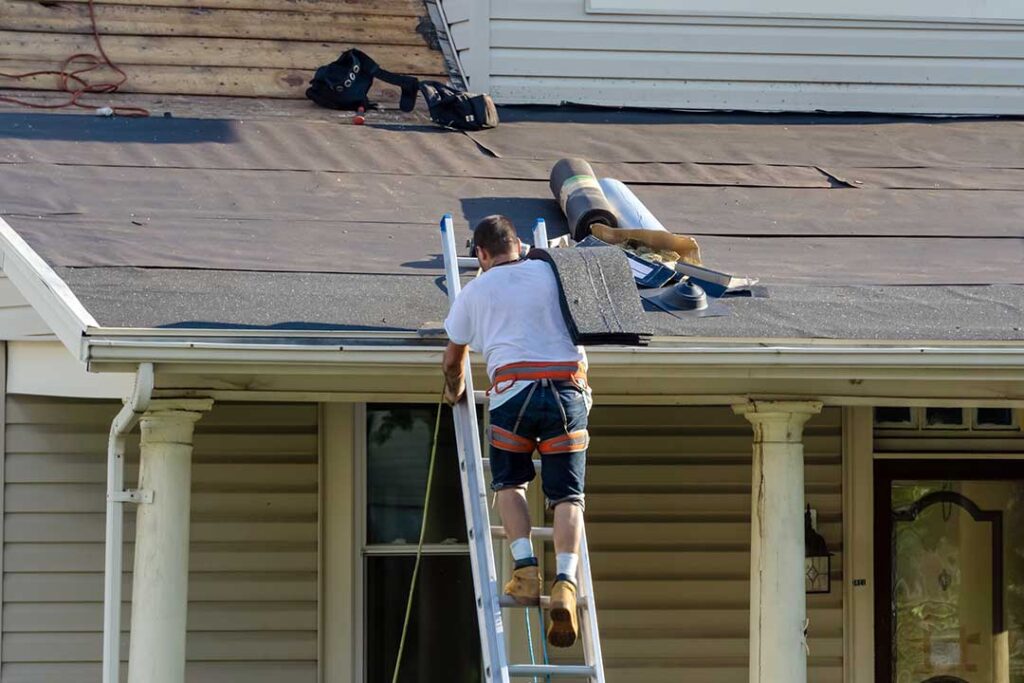
What makes a roofing material durable?
The most durable roofing materials are those that resist the local combination of snow, ice, wind, freeze-thaw cycles, moisture, sunlight, and physical impact. In New Hartford, NY, durability depends not only on the material itself but also on roof slope, attic ventilation, installation quality, flashing, and routine maintenance.
A roof can be made from a long-lasting material and still fail early if water is allowed to collect, ice dams form repeatedly, or roof details are installed poorly. For that reason, durability should be evaluated as a complete roofing system rather than as a shingle or panel alone.
The materials most often associated with long service life include:
- Slate
- Copper and other quality metal roofing
- Clay or concrete tile
- Fiber-cement or composite roofing products
- Architectural asphalt shingles, when properly installed and maintained
Is slate the most durable roofing material?
Natural slate is often considered the longest-lasting conventional roofing material. Properly selected and installed slate can remain serviceable for many decades, and some slate roofs last a century or more.
Slate resists fire, insects, rot, and many forms of weather damage. It also retains its appearance because the stone does not depend on a surface coating that gradually wears away. Its main limitation is weight. The roof structure must be designed or evaluated to support it, especially if a home is being converted from a lighter material.
Slate is also brittle. Walking on it can cause cracking, and repairs require matching the thickness, size, and type of slate. Flashing around chimneys, dormers, valleys, and roof edges is especially important because these areas often fail before the slate itself.
For older homes, slate may be a durable choice only when the structure and supporting details are suitable. Replacing slate with a lighter material may be practical in some situations, but removing a serviceable slate roof solely because of its age can be unnecessary.
How long can metal roofing last?
Quality metal roofing can provide several decades of service and is well suited to snowy, windy conditions. Standing-seam metal roofs are particularly durable because they use long panels with concealed fasteners and fewer exposed points where water can enter.
Metal roofing offers several advantages:
- Strong resistance to wind and rain
- Good performance in heavy snow
- Low risk of rot, insect damage, or cracking
- Fire resistance
- Relatively low maintenance
- Long service life compared with many basic roofing products
Metal is not completely maintenance-free. Fasteners, sealants, penetrations, valleys, and areas where different metals meet should be inspected periodically. Snow guards may also be appropriate above entrances, walkways, or other areas where sliding snow could create a hazard.
A common misconception is that a metal roof will eliminate ice dams. It will not. Ice dams are primarily related to heat loss, attic insulation, ventilation, roof geometry, and weather conditions. Metal may shed snow differently, but the building still needs proper moisture and temperature control.
Are clay and concrete tiles durable in cold climates?
Clay and concrete tiles can last for many decades, and both are resistant to rot, insects, and fire. Their durability depends heavily on the specific product and the way it is installed.
In a cold climate, tile must be able to tolerate repeated freezing and thawing. Water that enters a porous or damaged tile can expand when it freezes, potentially causing cracks. Underlayment and flashing are also critical because tiles primarily shed water; the layers beneath them provide much of the roof’s weather protection.
Tile roofs are heavy, so structural capacity must be considered before installation. They can also be vulnerable to impact from falling branches or careless foot traffic. On homes where the structure is suitable and the product is rated for local conditions, tile can be a long-lasting option. It is less common on many Northeastern homes because of weight, cost, and architectural fit.
Can composite or synthetic roofing last as long as natural materials?
Composite roofing products are designed to imitate slate, cedar, or other traditional materials while reducing weight and maintenance demands. Their service life varies considerably by product, so general claims should be treated cautiously.
A durable composite roof should have:
- Clear testing for wind, fire, impact, and weather exposure
- A published expected service life based on realistic conditions
- Compatibility with local temperature changes
- Properly designed ridge, valley, flashing, and ventilation details
- Repair procedures that do not depend on discontinued components
Composite materials can be useful when a homeowner wants the appearance of slate or wood but cannot support the weight or maintenance requirements of those materials. However, a product’s expected life is not the same as a guarantee that every roof will last that long. Sun exposure, installation methods, attic conditions, and storm damage all affect actual performance.
Are asphalt shingles a durable choice?
Asphalt shingles are less durable than slate or high-quality metal, but modern architectural shingles can provide dependable performance when installed correctly. They are widely used because they balance cost, weight, appearance, repairability, and availability.
The most durable asphalt options generally have thicker construction, stronger wind resistance, and better protection against impact and weathering than basic three-tab shingles. Their service life is often measured in decades rather than generations.
In the local climate, asphalt shingles are especially affected by:
- Ice buildup and repeated freeze-thaw cycles
- Moss or algae growth in shaded, damp areas
- Wind lifting at roof edges
- Poor attic ventilation
- Damage from falling branches
- Improperly sealed flashing around penetrations
Dark streaks on shingles do not always mean the roof is failing, but curling, cracking, missing granules, exposed fasteners, and lifted edges deserve attention. A roof’s age should be considered alongside its condition rather than used as the only deciding factor.
Which roofing material handles heavy snow best?
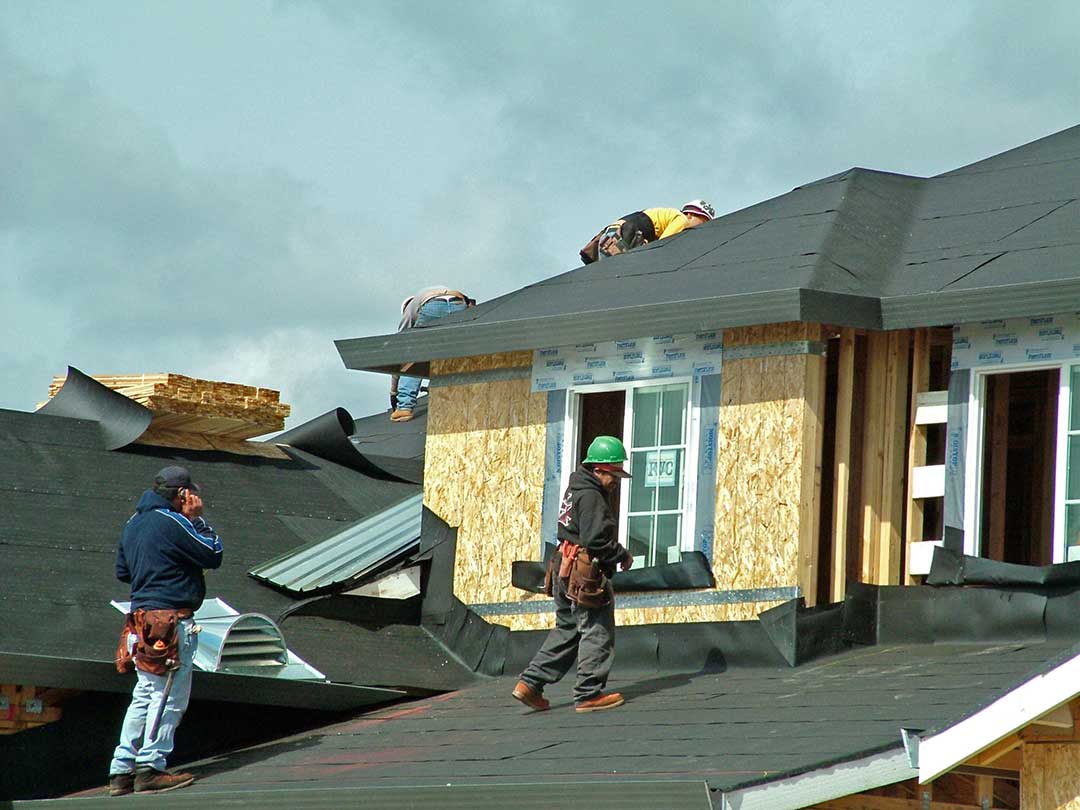
No roofing material automatically prevents snow-related problems. Roof shape, structural design, insulation, ventilation, flashing, and snow-management practices are equally important.
Metal, slate, tile, and asphalt shingles can all perform well under snow when the roof is designed for expected loads. The key questions include:
- Is the roof structure adequate for local snow loads?
- Does the attic stay cold enough to reduce uneven snow melting?
- Are valleys and roof-to-wall intersections properly flashed?
- Can snow slide unexpectedly from a smooth roof surface?
- Are gutters, downspouts, and drainage paths clear?
Snow should not be allowed to accumulate against chimneys, siding, roof-to-wall transitions, or poorly designed valleys. Heavy accumulation, sagging roof lines, ceiling stains, or repeated ice buildup are conditions that may require prompt evaluation for safety and building protection.
Does installation matter more than material?
Installation quality can determine whether a durable material performs well. Even slate or metal can develop leaks if flashing is incomplete, fasteners are misplaced, ventilation is inadequate, or roof edges are not properly secured.
The most durable roofing system usually includes:
- A sound roof deck
- Correct underlayment
- Properly installed flashing
- Adequate attic ventilation
- Secure drip edges and eaves
- Correct fasteners and spacing
- Details suited to the roof’s slope and shape
Complex roofs with dormers, chimneys, multiple valleys, and attached additions have more potential failure points than simple roof designs. Those details often deserve as much attention as the field material.
How should homeowners compare long-term durability?
The best material depends on the structure, budget, appearance, maintenance expectations, and future plans for the home. A useful comparison should consider more than the initial purchase price.
Evaluate:
- Expected service life under local weather conditions
- Weight and structural requirements
- Resistance to wind, fire, impact, and moisture
- Ease of locating compatible repair materials
- Maintenance and inspection needs
- Performance around chimneys, valleys, and roof edges
- How the material handles snow and freeze-thaw cycles
- Whether the roof can be repaired in sections rather than replaced entirely
For many area households, the practical choice is not necessarily the material with the longest theoretical lifespan. A well-installed roof with appropriate ventilation and sound flashing may provide better real-world value than a premium material installed without attention to the building’s structure and drainage.
In New Hartford, durable roofing is best understood as a combination of resilient materials, sound construction, and regular observation after major storms. The roof’s details, not just its visible surface, determine how well it protects the home over time.
